
Personal Protective Equipment
Entry to the construction site is prohibited without a safety helmet, safety harness, and protective footwear.

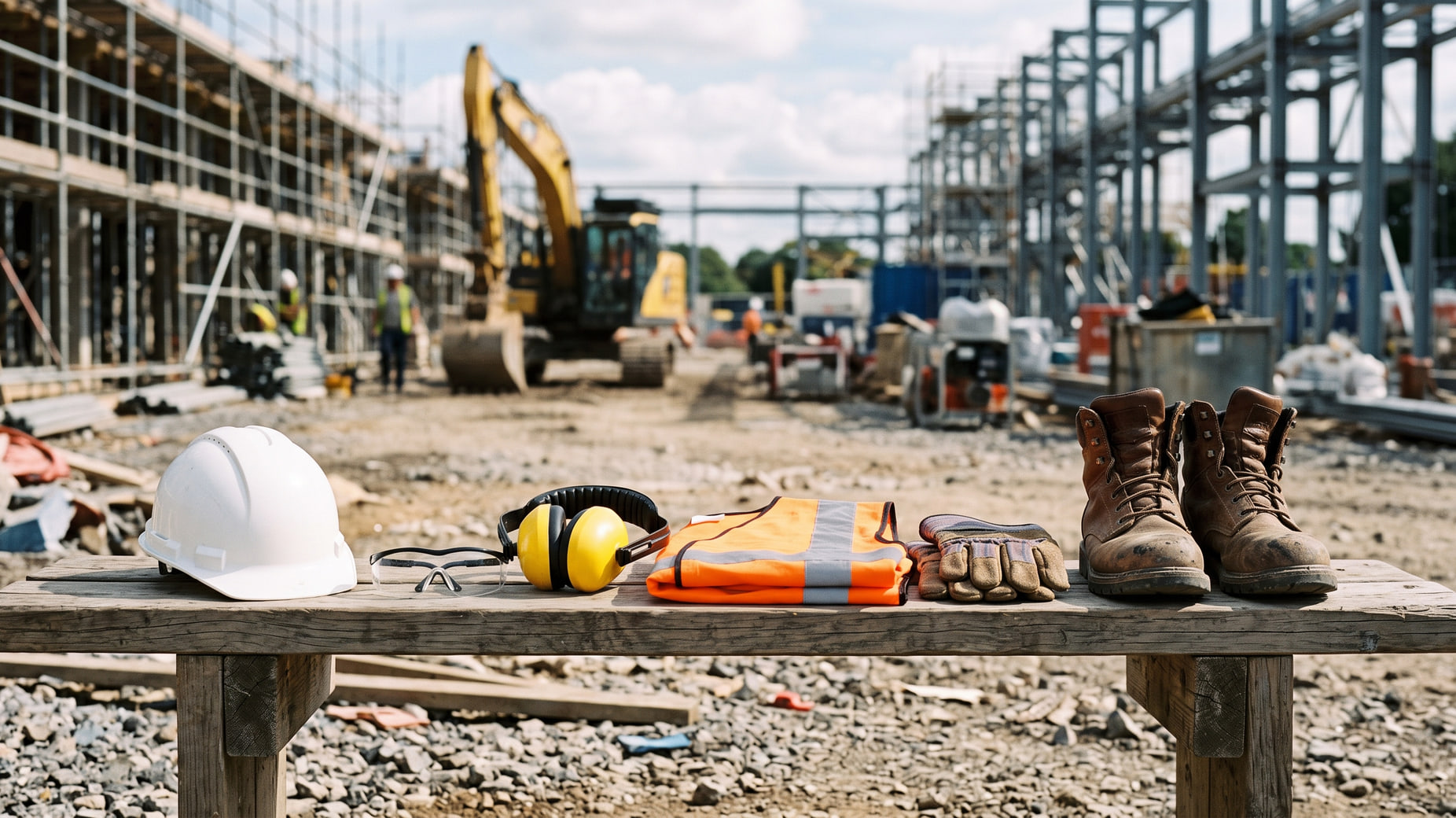
No task on a construction site is more urgent than the health and safety of the person performing it. Work does not begin until scaffolding has been fully assembled, formwork supports have been inspected, and excavation edges have been properly secured. This rule remains unchanged even under tight project deadlines. We see occupational safety not as a paperwork obligation, but as a daily practice that begins at the construction site entrance every morning.
We regard the requirements of Occupational Health and Safety Law No. 6331 as minimum standards. Our skilled workers, subcontractors, and clients visiting the construction site are all required to follow the same safety rules.

Entry to the construction site is prohibited without a safety helmet, safety harness, and protective footwear.

Floor edges and openings between levels are secured with protective guardrails.

Pallets and heavy materials are handled only with appropriate lifting and transportation equipment.

Every new employee receives the necessary safety briefing before entering the work area.

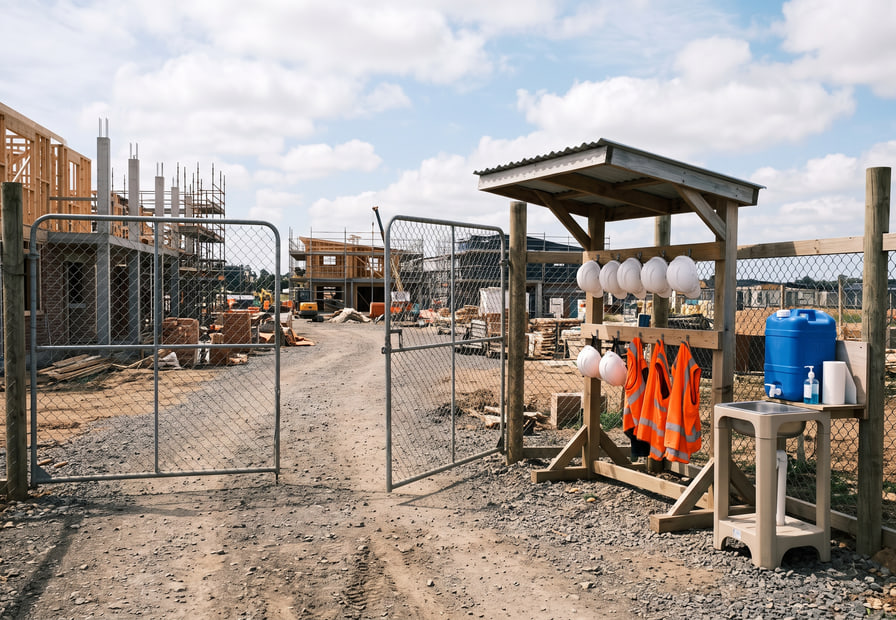
Before work begins each morning, team leaders review the day's high-risk activities: which floors will undergo formwork removal, when cranes will transport loads, and which areas must remain restricted. Electrical distribution panels are kept locked, and residual current devices are used in temporary electrical installations. Workers wear safety goggles, hearing protection, and dust masks when cutting paving stones and curbstones, and materials are never stored along excavation edges. Near-miss incidents are recorded just like accidents, because an incident that almost caused harm can provide the most valuable warning for preventing a future accident.
Before starting work, every subcontractor operating on our construction sites must provide the required training and medical fitness documentation for their employees. Visitors may enter the site only when accompanied by an authorized representative and wearing a safety helmet and high-visibility vest. Passing beneath an operating crane is strictly prohibited under all circumstances.
When an accident occurs, our first question is not "Who made a mistake?" but "How was this allowed to happen?" Every identified cause is incorporated into our working procedures and the safety rules of future construction sites. These findings are shared with all teams to prevent similar incidents from occurring again.